A6 Booklet Printing in Dubai
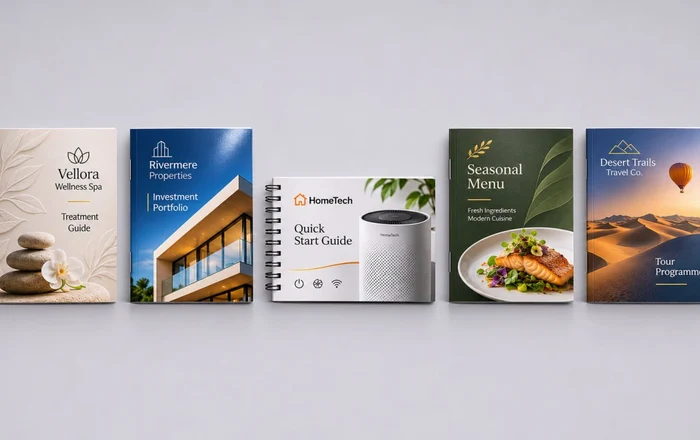
- Material: offset, coated, and designer paper.
- Format: A3, A4, A5, and custom sizes.
- Design: refinement or development of a unique layout.
- Printing methods: offset, digital, UV printing.
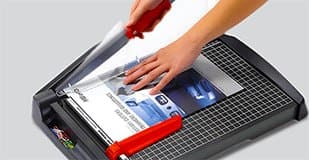
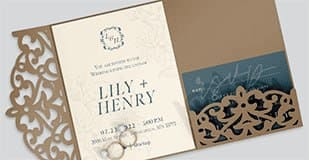
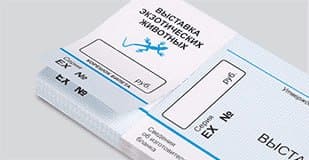
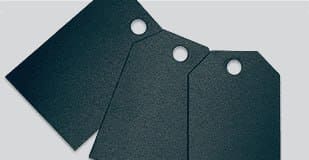
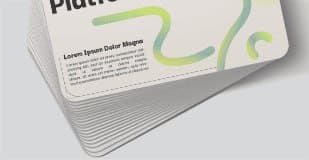
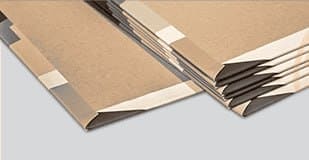
- Post-printing processing: embossing, folding, binding, laminating, die-cutting, corner rounding, perforation.
- Production time: from 1 day.
 Price list
A price list implies the use of a limited set of materials and production types.
Printing is a complex technological process where each order is unique and one-of-a-kind, and the cost depends on a number of factors, such as product type, size, material, finishing, print run, etc.
In a world of templates and ready-made solutions, we approach each customer individually, focusing on their specific “pain points”, and we take on the challenge of solving complex and unclear tasks. Relying on years of experience, the professionalism of our staff, and a constantly updated fleet of equipment, we can offer more options than just a dry cost in a table.
We will help optimise production, smooth out budget constraints, and find alternative solutions. Most importantly, everything is resolved through dialogue, where we ask clarifying questions to find the most convenient and most useful option.
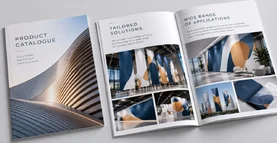
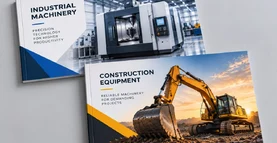
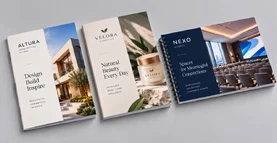
An A6 booklet measures 105 × 148 mm and offers a compact way to present information across multiple pages. Businesses use this format for product guides, event programmes, promotional brochures and instructions that customers can carry with them or keep with the products they purchas.
PMG provides A6 booklet printing in Dubai with a choice of print run, colour options, paper stocks and binding methods. Portrait and landscape editions are possible, depending on the design and purpose of the order.
Digital and Offset Printing
Digital printing suits smaller runs, as it eliminates the need for printing plates.
Offset presses require initial preparation but may offer a lower unit cost for larger quantities.
Full-colour and black-and-white printing are possible.
The cover and inner page can also have different colour configurations. For a compact product guide or event programme, the layout fit the information onto the pages without making essential details too small to read.
Paper and Cover Selection
Coated paper is suitable for photographs and colourful illustrations. Uncoated varieties offer a less reflective surface, while speciality grades add distinctive textures. A range of paper weights, typically between 115 and 170 gsm, is available for A6 booklets. A heavier cover stock can provide greater durability, particularly when the item will be handled frequently. The choice of paper also affects the thickness of the finished booklet and the way its pages are secured.
How we print


Portfolio

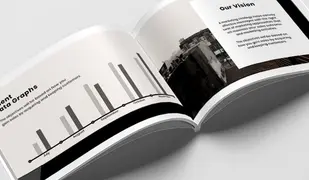
Binding for Different Page Counts
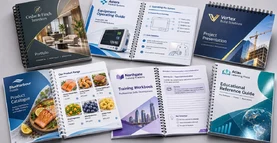
Saddle stitching is suitable for thinner editions. Folded sheets are held together by two metal staples along the central crease. The total number of pages must be divisible by four.
For a thicker booklet, perfect binding joins the pages along the spine with adhesive and adds a wraparound cover. Sufficient thickness is necessary for a reliable glued connection.
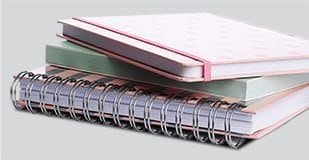
Spiral binding is another choice for reference guides and instructions. A metal or plastic coil runs through holes along one edge, allowing the pages to turn through 360 degrees. The most appropriate binding method depends on the number of pages and the intended use.
Decorative Cover Finishes
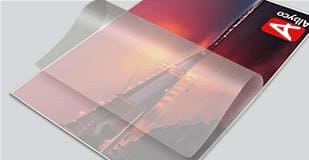
Matt lamination reduces glare, while gloss lamination gives printed graphics a more reflective appearance.
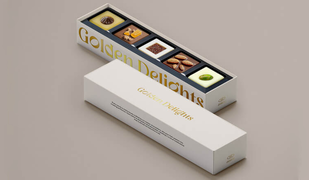
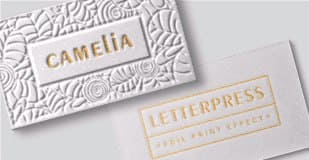
Foil stamping, embossing and spot UV varnishing can be used to highlight selected details, such as a logo or title, provided the chosen paper or board is suitable for the technique.
On a small-format cover, these effects are often applied to specific design elements rather than the whole surface.
Benefits


A6 Booklet Printing Cost
The price is calculated individually according to the order specifications.
Quantity, total page count, colour configuration and paper weight determine the basic printing and material costs. The selected binding method and decorative treatments also affect the quotation.
Larger runs may reduce the unit price, particularly when using offset technology. To request a quotation, provide the required number of copies, page count, preferred paper, binding type and finishing details. If several artwork versions are planned, specify the quantity for each one.
Steps printing


Reviews
Types of Print Finishing

Our clients























Cooperation