



Spiral Bound Book Printing
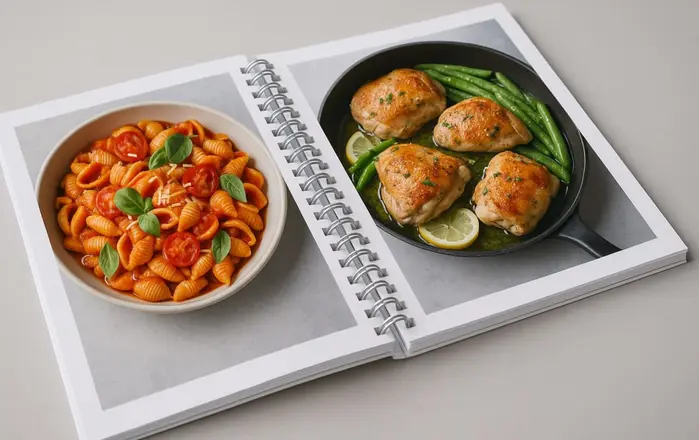
- Material: coated paper, designer paper, cardboard, and synthetic paper (bump vinyl).
- Format: A3, A4, A5, and custom sizes.
- Design: refinement or development of a unique layout.
- Printing methods: offset, digital.
- Post-printing processing: embossing, debossing, laminating, die-cutting, corner rounding, binding and bookbinding, numbering.
- Production time: from 1 day.
 Price list
A price list implies the use of a limited set of materials and production types.
Printing is a complex technological process where each order is unique and one-of-a-kind, and the cost depends on a number of factors, such as product type, size, material, finishing, print run, etc.
In a world of templates and ready-made solutions, we approach each customer individually, focusing on their specific “pain points”, and we take on the challenge of solving complex and unclear tasks. Relying on years of experience, the professionalism of our staff, and a constantly updated fleet of equipment, we can offer more options than just a dry cost in a table.
We will help optimise production, smooth out budget constraints, and find alternative solutions. Most importantly, everything is resolved through dialogue, where we ask clarifying questions to find the most convenient and most useful option.
A book is a work of art where both content and form play crucial roles. To choose publishers, customers look at the font, colour, and cover, especially when the printed product is meant as a gift. In this case, the design matters as much as the text, evoking positive emotions through its elegant appearance. Today, spiral-bound book printing is as well-known as any other familiar print type.
Assembling
Incorporating steel or synthetic curls of various colours, spiral-bound publications are widespread in all areas of our lives where organisers, notepads, booklets, etc., are our indispensable attributes assisting us in everyday life.
The fastening process involves threading a continuous coil with or without coating, through the holes punctured in the pages of the block at evenly spaced intervals.
There are two main steps involved for block binding: perforating holes in the spine area and threading the spring through these perforated holes. Perforation can be done in stacks of 3 to 30 sheets, or separately one by one. In small-scale production, desktop “office” perforators feature good efficiency. Larger print runs require universal perforating and creasing automatic tools. For binding with metal or plastic coils, small round holes about 2-3 mm in diameter are punched with a pitch of 4:1 (four perforations per inch, spaced 6.35 mm apart). After that the springs are threaded onto the blocks manually or with a semi-automatic machine.
How we print


Portfolio
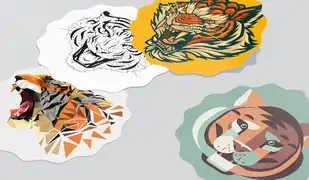
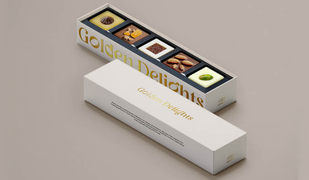
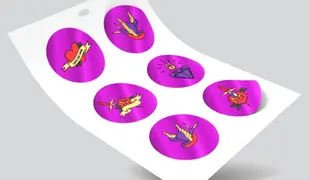
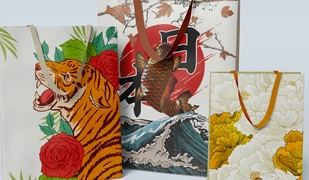
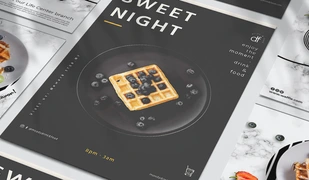
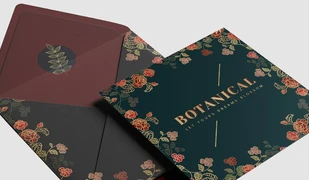
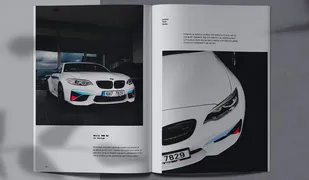
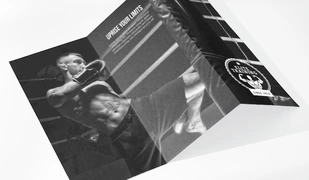
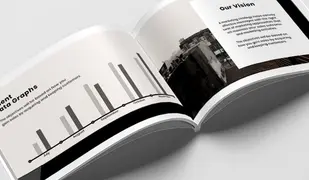
Artwork Types
Like other binding methods, spiral-bound printed materials are either hard or soft backs. You will hardly find universal criteria for choosing between the two; however, publishers today often prefer soft covers for spiral-bound books. Hardbacks still hold relevance in the modern publishing industry, particularly among older readers.
PMG Design and Artwork Services offers high-quality spiral-bound printing. Our professionals assist clients in finding the best artwork design and type, suggest cost-effective manufacturing options without compromising the appearance of the custom printed product
Benefits


Versatile Applications
Spiral-bound books are pretty handy and nice to use since you can completely open them turning their pages 360 degrees to lie flat on a table or another surface. Hardly ever found among fiction or periodicals, they are perfect for education and everyday life to be used as
- Catalogues, operations manuals and cookbooks to assist in theory and practice;
- Textbooks, guides and musical notebooks for our education and school exercises for our children;
- Photo albums that look like real colour magazines, food menus for us to enjoy weekends at restaurants or cafes;
- And more.
Price
The cost of printing depends on several factors:
- Whether a ready design is available or needs be developed from scratch or modified.
- The type of material used
- Printing technology (e.g. offset or digital).
- The number of pages, front design features, publication format.
- Any post-printing processes required: die-cutting, embossing, foil stamping, varnishing, etc.
- The number of copies.
- Production time.
Working closely with our customers, we do our best to elaborate the ideal solution and come out with the best offer in response to their needs.
Steps printing


Reviews
Our clients























Main Types of Spiral Binding
- Plastic Coil Binding involves a precise perforation process using specialised equipment. Once the punching is done, the coilis put through the perforations, either square or round, and closed to ensure a secure and stable attachment. The sheets are turned without affecting the whole assembly.
- Wire-O (or “Curly”) Binding presents a sequence of twin ring loops created from a single strand entered into pre-drilled perforations. Whilst the binding device holds the curls open, the sheets can be put in. As soon as the loops are closed, no page can be added or lost without destroying the unit. A hard cover alternative to this double ring binding is called “Cased-in Wire-O”, as the block is inside a hard case.
Of course, this small list is not complete. With the development of the printing industry there are more and more artistic ideas and designs showing up every day to serve our needs and surprise us, and there could be more subtypes identified with the spirals or rings involved. For us it is important now to demonstrate the key difference which is available within one and the same process, but is not apparent at first sight.
Types of binding


Cooperation


Advantages
Offering various comfortable applications, the spiral bound books are
- convenient and practical featuring durability - the benefits no other editions demonstrates to the same extent;
- cost effective and made quickly as it doesn't take costly equipment, much time or effort to produce a circulation;
- capable to hold many pages containing much important information just in one volume so that we avoid having to carry lots of single volumes or losing one at a bad time;
- hard to damage when making us concentrate on the contents rather than on handling.
Disadvantages
- Rings or spirals consume some field at the spine reducing the useful surface
- Stacking may be difficult because of the protruding spirals. Therefore, if you are short of room at your bookshelf, you need to consider the handicap;
- No incorporation of individual sheets is possible. This “drawback” could be just as well left out as it is characteristic of almost any other binding type.


