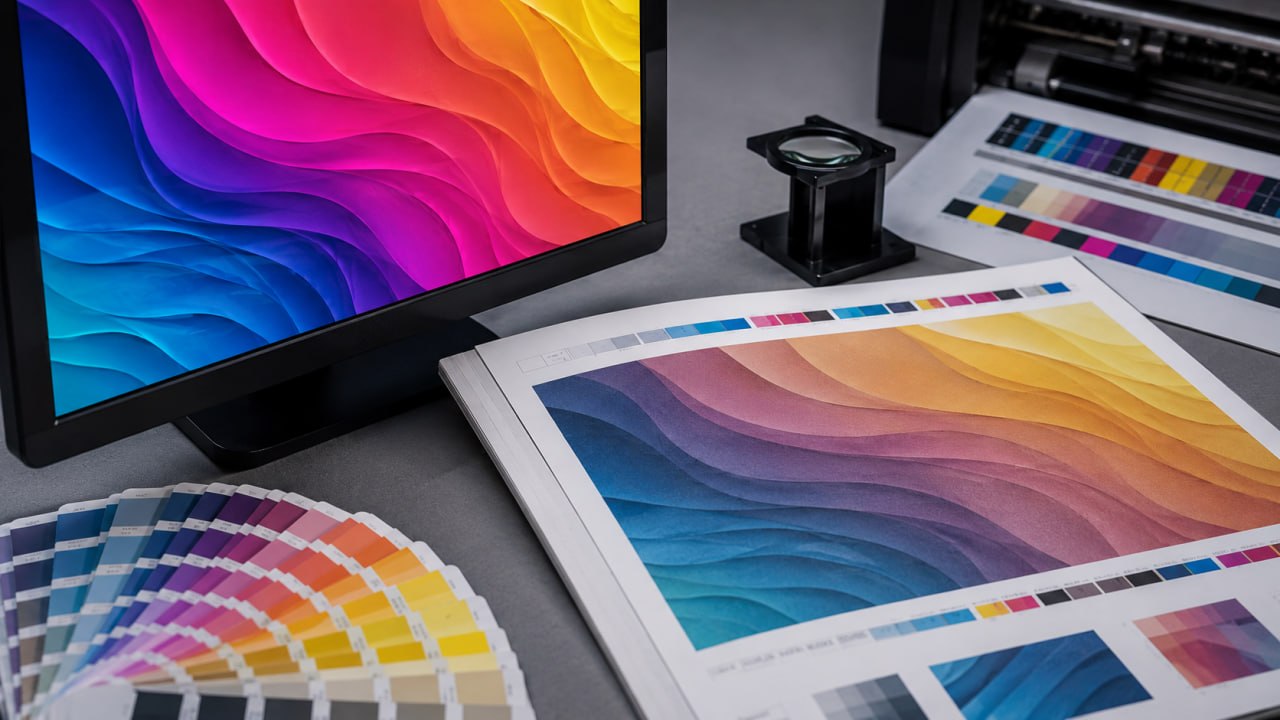

Why Paper Decisions Often Decide the Success of a Print Project Before Design Even Matters
In commercial printing, there is a recurring situation that experienced production teams recognise immediately.
A client arrives with a strong design, refined branding, carefully prepared artwork… and only a very vague idea of paper choice.
At that stage, the outcome of the project is already being shaped — not by the design, but by the material it will be printed on.
The same artwork can communicate premium positioning or feel completely generic, depending entirely on substrate selection. This is especially evident in markets such as Dubai, where brands compete intensely for visual attention across the retail, hospitality and real estate sectors.
Paper is not a background decision. It is part of the message.
Why “paper” is actually a brand communication tool
Most buyers think of paper in technical terms: thickness, coating and price per sheet.
In production reality, paper behaves more like a brand amplifier.
A structured, heavy board communicates stability. A soft uncoated sheet communicates authenticity. A high-gloss coated surface enhances purvisual intensity. None of these effects are accidental — they are predictable outcomes of material behaviour.
This is why two identical designs printed on different stocks can produce completely different commercial results.
In many cases, the paper is doing more persuasive work than the design itself.
Coated papers and why they dominate marketing materials
Coated paper is engineered to control ink absorption. This means ink sits closer to the surface, creating sharper detail and stronger colour density.
In real production environments, this is why coated stocks are widely sed for:
- product catalogues;
- sales brochures;
- retail marketing materials
However, there is a trade-off that often gets ignored in client discussions.
Coated paper improves visual performance but reduces tactile warmth. It feels more manufactured and less natural.
For luxury positioning, that can be either an advantage or a limitation, depending on the brand language.
Uncoated paper and the shift towards “authentic” branding
Uncoated paper behaves differently. It absorbs ink more deeply, softening contrast and reducing glare.
This is why it is commonly used in:
- corporate stationery
- reports and documents
- premium minimalist branding systems
What many businesses underestimate is how strongly uncoated paper affects perceived honesty.
In client perception studies across corporate environments, uncoated materials consistently perform better in trust-based communication formats.
The trade-off is reduced visual impact: images appear less sharp, colours less saturated.
This is not a printing limitation — it is a design characteristic.
When paper becomes more important than printing technology
There are categories where paper selection outweighs the printing method itself.
Packaging is the clearest example.
A rigid box printed with basic artwork but high-quality board and finishing will often outperform a visually complex design on weak material.
This is because packaging is not evaluated digitally; it is evaluated physically — through weight, texture and structural integrity.
In Dubai’s retail and luxury segments, this is particularly noticeable. Products are often positioned in environments where competitors already use high-end visuals. Differentiation shifts from design to material experience.
Specialty papers and why they exist outside standard logic
Specialty and textured papers are not chosen for functional reasons. They exist for perception control.
These materials introduce irregularity: texture, fibre, depth, surface variation. The human eye interprets these cues as “crafted” rather than “mass-produced”.
This is why they are often used in:
- luxury invitations
- boutique branding
- high-end corporate identity systems
However, they also introduce constraints. Not every printing method behaves predictably on textured surfaces, especially with fine detail or high ink coverage.
This is where production experience matters more than specification sheets.
Cardboard and rigid boards: where structure becomes part of communication
Thicker boards are not just about durability.
They influence how the printed piece is physically handled.
A heavier business card, for example, is not simply more durable — it changes perceptions of the brand before any content is read.
This is why board selection is critical in:
- business cards
- packaging structures
- presentation folders
In procurement decisions, this is often where marketing intent and production reality collide. A design that looks simple on screen can require significantly more complex material planning in production.
Recycled papers and the reality of sustainability messaging
Sustainable paper is often treated as a branding statement rather than a production category.
In practice, recycled and FSC-certified papers vary significantly in texture, brightness and ink performance.
Brands choosing sustainable materials often need to accept trade-offs in visual consistency, especially in high-coverage colour work.
However, in sectors where sustainability is part of the brand identity, this trade-off is not a limitation — it becomes part of the message itself.
How print professionals actually choose paper (not how catalogues might suggest)
In real production environments, paper is rarely selected from a catalogue based on description alone.
It is evaluated through a combination of:
- intended usage environment
- handling frequency
- brand positioning
- ink behaviour requirements
- finishing compatibility
This is why experienced print teams often reject the idea of “best paper” as a concept. There is only “best for this specific application”.
The same stock can be ideal for one project and completely unsuitable for another.
What changes when paper is treated as strategy, not cost
One of the most common procurement mistakes is treating paper as a cost optimisation variable.
In reality, it is a perception engineering tool.
A small increase in paper quality can shift how a product is positioned in the market. In competitive environments — especially retail, hospitality and real estate — that shift often matters more than incremental design changes.
This is where experienced brands separate production thinking from marketing thinking.
Practical perspective on choosing the right paper
The decision is rarely technical. It is contextual.
The key questions are not “What paper is this?” but:
- how should this piece feel in physical interaction
- what level of durability is required
- what perception must be created within 3 seconds
- what printing method will interact with it correctly
Once those questions are answered, paper selection becomes a controlled decision rather than a guessing exercise.
What actually matters when selecting printing paper
- Paper defines perception before content is read
- Coated and uncoated stocks serve different communication roles
- Packaging relies heavily on structural material, not just design
- Texture and weight influence brand credibility in physical environments
- Sustainability materials introduce both brand value and technical trade-offs
- The best paper choice depends on use case, not category
- Real production decisions are always contextual, not generic
The most successful print projects are defined not by design complexity, but by how well material and message align in the physical world.