Why Is Lamination Necessary?
Print customers often wonder why they should pay extra for finishing when digital presses already produce crystal-clear images. The answer lies in the harsh reality of everyday use: paper-based products deteriorate quickly. Friction, moisture and accidental creasing all undermine their appearance. Lamination acts as an invisible shield. Essentially, it involves wrapping a printed sheet in an ultra-thin polymer layer. The main purpose is to protect the ink layer from damaging environmental influences and give the finished product a premium sheen, transforming ordinary paper into a durable, long-lasting product with a high-quality finish.
Types of Lamination
Hot Lamination
This process uses high temperatures and considerable pressure. Heated rollers warm the polymer film to 100–140°C, causing the thin adhesive layer on the film to bond firmly with the surface of the paper or board.
The key advantage is exceptionally strong adhesion. The coating bonds tightly to the substrate, creating a robust barrier against scratches, water and sunlight. It can also increase the stiffness of the material itself: a thin booklet or menu becomes less flexible and holds its shape better. This is particularly important for rigid packaging and promotional displays.
Cold Lamination
As the name suggests, this process does not involve heat. The transparent film is bonded to the surface by applying pressure with rollers over a pre-applied pressure-sensitive adhesive. This technology is particularly useful for heat-sensitive materials. If you need to protect heat-sensitive photographs or synthetic substrates that could deform under hot rollers, cold lamination can be the appropriate solution.
Which Lamination Film Is Used?
Cold lamination may offer slightly less resistance to extreme moisture and heavy mechanical wear than hot lamination, but it helps preserve the original surface texture and colour balance of the printed design.
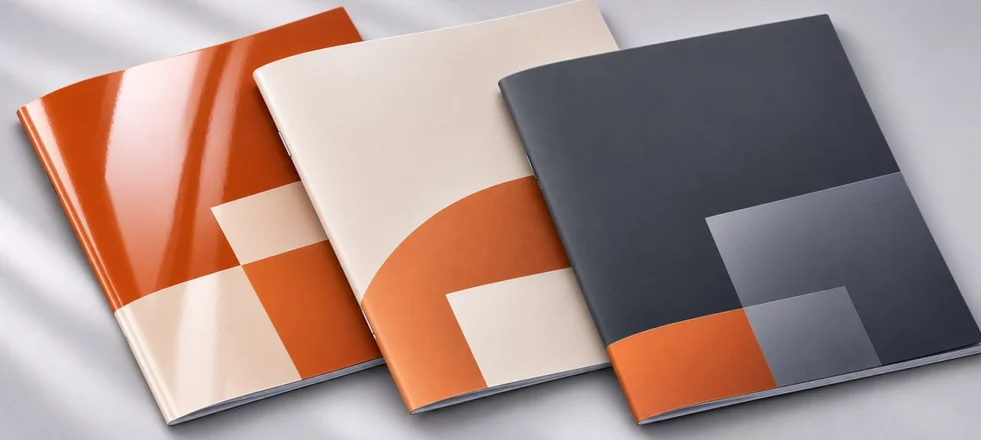
In terms of visual effects, gloss is one of the most popular finishes. It enhances the colours, making shades appear deeper and outlines sharper and more defined. A matt finish offers a different effect: it reduces unwanted reflections, gives the paper a refined, velvety appearance and makes long passages of text more comfortable to read.
Another finish that has gained popularity in recent years is soft-touch lamination. This film gives ordinary paper a texture reminiscent of peach skin or soft-touch rubberised plastic, creating a distinctive tactile experience. The final choice depends on the marketing objective and the impression you want to leave with your audience.
What Are the Advantages of Lamination?
The fundamental benefit of paper lamination is that it creates a protective barrier, significantly extending the useful life of a printed product. The thin plastic layer helps protect the surface against several forms of external damage. Three key benefits explain the technology's popularity:
- Protection against liquids and grease: paper becomes more resistant to spilled coffee, dirt and accidental splashes, helping the surface remain clean.
- Colour protection: the film's UV-filtering properties can help prevent pigments from fading, preserving the original vibrancy of the printed design.
- Protection against physical wear: edges are less likely to fray, while the surface is better protected against the fine scratches caused by friction in a pocket or bag.
These benefits are particularly important for products used every day. Lamination helps a business card or menu retain its freshly printed appearance even after months of regular use.
Which Printed Products Need Lamination?
Laminating the covers of catalogues, magazines, books and corporate reports has long been common practice. Without a protective polymer layer, premium printed products can lose their attractive appearance quickly. Lamination is also widely used for smaller printed items, including business cards, badges, certificates, loyalty cards and restaurant menus. The process is also used for products that need to withstand demanding conditions, such as heavy-duty paper bags, archive folders, tourist maps and step-by-step instructions that users repeatedly fold, crease and unfold.