What Is Gold Foil Stamping?
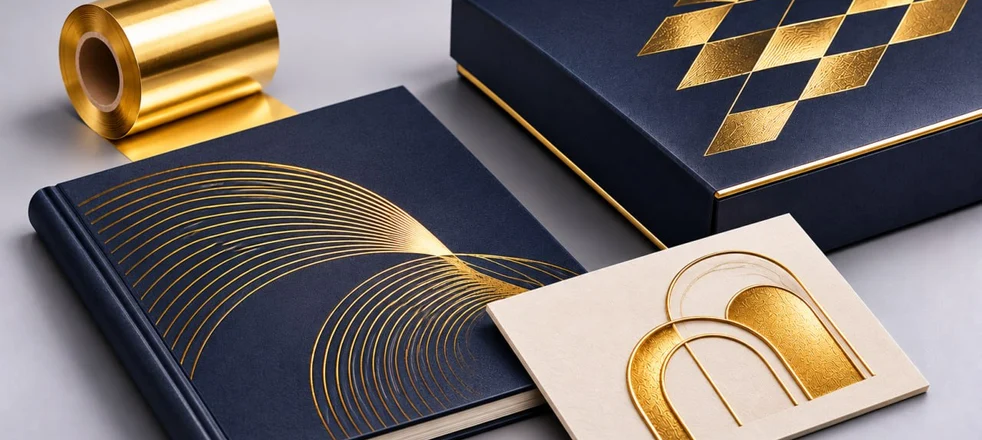
Gold foil stamping is widely regarded as one of the most elegant forms of print finishing. This technique transfers metallic foil onto paper, board or leather surfaces, transforming standard printed materials into exclusive, eye-catching pieces. Using a specialised press, foil ribbon and metal die, it creates a striking design that immediately attracts attention.
Types of Gold Foil Stamping
The choice of finishing technique depends on the design concept, the properties of the substrate and the project's budget.
Cold Foil Stamping
This foil application method is widely considered one of the more cost-effective options for branding. Its operating principle shares some similarities with lamination and involves three basic stages:
- Pressing the metallic foil firmly against the printed sheet.
- Curing the adhesive layer.
- Securing the resulting image with a protective varnish.
The key advantage of this method is that it does not require heat to transfer the foil. This makes it particularly suitable for delicate and heat-sensitive substrates.
Hot Foil Stamping
This traditional, time-tested technique uses a metal die heated to the required temperature. Under substantial press pressure, the die transfers a microscopic layer of foil onto the material's surface. This approach provides excellent durability and precise reproduction of even the finest details.
Foil Embossing
Foil embossing combines two finishing effects, creating a raised relief while applying a metallic coating. The result is a pronounced three-dimensional effect paired with a refined golden sheen. The process involves the following stages:
- Tooling preparation: Matching dies — a punch and a counter-die — are made from brass or durable polymers.
- Heating: The upper die is heated to approximately 120–150°C. Foil positioning: The metallic foil is placed between the die and the substrate.
- Pressing: Under substantial pressure, typically stated as 25–50 kg/cm², a raised relief is formed while the gold foil is transferred to the surface.
This technique allows for complex, multi-level designs, precise reproduction of fine details on textured papers and a more pronounced tactile effect. Foil embossing requires highly skilled operators and precise machine settings, but the finished result can justify the investment by giving the product a distinctly premium appearance.
Types of Dies Used for Foil Stamping
The final quality of a printed product depends directly on the quality of the die and the precision of its engraving. Dies are made from specialised metals, each suited to particular production requirements:
- Brass dies: Provide excellent reproduction of fine surface details, withstand repeated heating cycles and are ideal for medium and large print runs.
- Magnesium dies: A practical choice for producing short-run samples quickly or fulfilling urgent orders.
- Copper dies: Offer excellent thermal conductivity, helping to distribute heat evenly across the surface, as well as high resistance to physical wear over extended production runs.
The type of die influences how accurately the decorative finish transfers onto paper, board or leather. Choosing the appropriate engraving method helps prevent microscopic cracks in the working surface and can significantly reduce the time required for machine make-ready.
Applications of Gold Foil Stamping in Printing
This finishing technique is widely used to produce:
- Luxury packaging, where the golden sheen conveys a premium image and creates a strong first impression.
- Premium corporate gifts, award certificates and business diaries designed for VIP partners and senior executives.
- Book jackets, gift art books and prestige catalogues, where visual appeal and tactile quality are particularly important.
- Labels for the spirits, perfumery and cosmetics industries, where every detail contributes to the overall brand image.
- Executive business cards, where raised relief and the sheen of the foil help communicate the owner's professional standing.
Key Advantages of Gold Foil Stamping
Why does this print-finishing method continue to attract strong demand?
- Durability: The transferred foil layer is resistant to direct UV exposure, does not oxidise readily and resists abrasion during regular use.
- Tactile appeal: The perceptible relief creates a distinctive physical experience for the recipient, potentially strengthening their emotional connection with the brand.
- Versatility: The technique can be used on a range of substrates, from porous paper and heavy board to PVC and genuine leather, expanding the possibilities for creative design.
- Premium appearance: The golden finish can increase the perceived value of printed materials and help justify a premium price in the eyes of the customer.
- Cost-effectiveness for large runs: Once the die has been made, foil transfer can be fast, consistent and straightforward for press operators to control.
Gold foil stamping remains a popular choice among print-finishing techniques in the modern printing industry. If your aim is to give printed products a luxurious appearance and lasting visual appeal, gold foil can be an effective solution.
Our printing house provides a complete production service, from creative artwork development to the final finishing of the print run, including precision gold foil stamping. We use advanced equipment and certified consumables to deliver printed products that meet high standards of premium quality.