What Is Flexographic Printing?
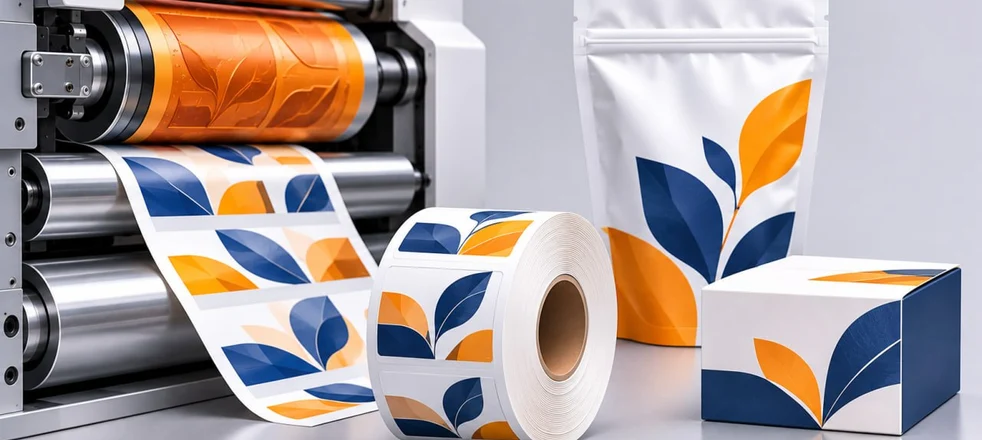
Flexography is now considered one of the fastest-growing areas of the printing industry. The key feature of flexographic printing is the use of flexible printing plates that adapt easily to the texture of the substrate being printed. This makes it possible to print on surfaces that are difficult to handle with conventional offset or digital printing.
Flexographic printing is used to produce:
- flexible packaging and bags;
- self-adhesive labels;
- corrugated packaging and paper packaging;
- boxes for food products and medicines.
Flexography provides reliable ink transfer even onto porous, glossy or cellular substrates. The technology continues to evolve, with automated quality control being introduced and safer, more environmentally friendly inks being adopted, further expanding the range of applications for flexographic printing.
Strengths of Flexographic Printing
- Versatility: it can print on almost anything, from very thin films to thick microfluted corrugated board.
- Fast drying: the use of fast-drying inks, including water-based and alcohol-based formulations, significantly shortens the production cycle, eliminating long drying periods and reducing the risk of smudging.
- High productivity: the rotary printing process and continuous roll-fed operation allow millions of impressions to be produced in a single shift.
- Excellent print quality: the flexible plate conforms closely to microscopic irregularities in the substrate, providing even ink coverage with minimal defects.
- Durable printing plates: the wear resistance of photopolymer plates allows very large volumes to be produced without significant loss of sharpness, while the relatively low cost of plate production helps make large print runs economical.
- Multi-colour printing: the technology handles complex graphics and accurate colour matching effectively.
This is why flexography has become a leading technology in industrial printing, where speed, reliability and flexibility are essential.
Weaknesses and Limitations of Flexography
Despite its advantages, the process has a number of technical and financial considerations. It is not ideal for reproducing extremely fine details or complex photorealistic images: the halftone structure can sometimes produce visible graininess, while very small type may become distorted because of the characteristics of the impression process.
Maintaining the required ink viscosity requires continuous monitoring, as liquid formulations are sensitive to changes in temperature and humidity in the production environment. Machine make-ready also takes time: the pressure between the rollers must be set precisely, otherwise the image may become distorted.
Working with aggressive solvents requires strict occupational safety measures, effective extraction systems and appropriate waste disposal. However, with experienced operators, these limitations can be managed, resulting in consistent and reliable output.
The Flexographic Printing Process
- The production cycle consists of several sequential stages: Plate making: a photosensitive emulsion layer is applied to a photopolymer plate and exposed to UV light through a film negative. After development, final exposure and drying, a relief plate is produced, with the printing elements raised above the non-printing areas.
- Plate mounting: the finished plate is securely mounted onto the plate cylinder, and the unit is prepared for production. Image transfer: the rotating plate cylinder comes into contact with the anilox roller, picks up a controlled amount of liquid ink and transfers it to the moving web through direct contact.
- Drying: as the material moves continuously through the press, it passes through drying units after each colour station, where the ink is dried and fixed to the substrate.
- Post-press.
The use of advanced printing presses and careful control of production parameters helps ensure predictable results across a wide range of substrates. This allows flexography to remain one of the most efficient, high-speed and adaptable printing methods in the modern printing industry.