What Are Perfume Blotters?
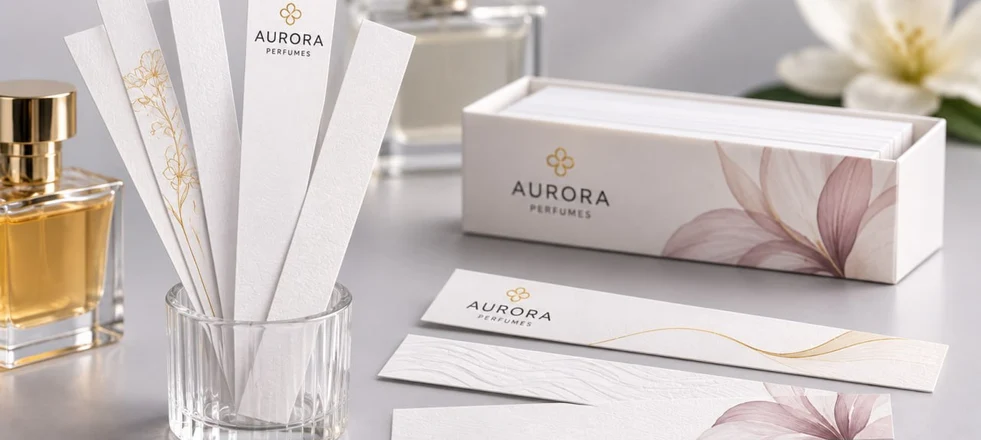
In perfumery, a special tool is used to sample fragrances: the perfume blotter, or simply a blotter. It is a small strip of paper used in shops to test perfumes and eau de toilette. Blotters allow the fragrance to be assessed without applying it to the skin. They are made from specially designed paper with a loose, porous structure that absorbs the fragrance well and allows it to develop gradually, revealing its different nuances.
What Makes Blotters Useful?
Blotters are an essential tool in perfume shops. Here is why they are so widely used:
- Hygiene – customers can test a fragrance without direct contact with the bottle. Unaltered fragrance perception – unlike skin, paper does not alter the fragrance composition.
- Easy comparison – several fragrances can be applied to separate tester strips to assess their differences.
- Economical use of perfume – a small amount of fragrance on a blotter is sufficient for a thorough assessment.
- Attractive appearance – blotters featuring a shop's or brand's logo enhance the presentation of the perfume products.
Why Order Custom-Printed Blotters?
Many perfume shops and brands order blotters featuring bespoke designs. This helps them to:
- Increase brand recognition – logos, perfume names or shop contact details can be printed on the blotters.
- Create a consistent visual identity – blotters can complement the packaging and other elements of the brand's visual identity.
- Enhance product presentation – attractive blotters catch customers' attention and create a more premium impression.
With custom printing, you can choose the blotter’s shape, size and colour, as well as the material best suited to the fragrance.
What Materials Are Used to Make Blotters?
The choice of paper is important, as it affects both the blotter’s appearance and its functionality. Paper designed for high-quality printed publications is widely used for blotters. Its porous structure absorbs fragrance effectively, while the paper remains strong yet soft. The area with the logo is often given additional protection with a layer of varnish or lamination.
Traditional offset paper is another option for blotters. It is a cost-effective solution when maximum absorbency is not a priority. However, blotters made from this paper may be less visually appealing and less suitable for liquid fragrancies.
At the premium end, designer paper is used by international brands to complement luxury fragrances and highlight their exclusivity.
Printing Technologies for Perfume Blotters
A blotter is more than just a fragrance tester; it is also an important element of a perfume brand's identity. Print quality directly affects how customers perceive the product. Logos, fragrance names and decorative elements must be clear, durable and safe. The choice of printing method depends on the print run, budget and turnaround requirements.
Offset Printing
Offset printing remains the gold standard for large print runs. It delivers highly detailed images on paper and accurate colour reproduction. For orders of several thousand copies or more, offset printing is the most cost-effective option. However, offset printing has its limitations. Time is needed to produce the printing plates and set up the equipment, making this method unsuitable for urgent orders of small quantities.
Digital Printing
Digital printing is ideal for small print runs, trial batches and urgent orders. It requires no printing plates, significantly speeding up production. You can receive your finished blotters as early as the following day. Modern digital equipment delivers quality close to that of offset printing, allowing full-colour images with gradients and complex graphics to be reproduced.
Digital printing is also well suited to personalisation. For example, unique codes or individual names can be printed on each blotter for marketing campaigns. The unit cost is higher than with offset printing, but lower pre-press costs make digital printing more cost-effective for small quantities.
Ink and Safety Requirements
Perfume products require carefully selected materials. The main rule is that neither the ink nor the paper should have its own odour. Any foreign scent, even a faint one, can distort the customer's perception of the fragrance. For this reason, print shops use specially certified inks for blotter printing that become inert once cured.
The second key factor is the material’s resistance to alcohol. Eau de toilette and perfumes contain a high concentration of ethanol. When a fragrance is applied to a blotter, the liquid must not cause the printed image to run. The ink must be chemically resistant so that the logo remains legible even after contact with perfume.
Protective Coatings
Post-press finishing is often used to improve the durability of blotters and protect the printed image. The most popular option is varnishing. A water-based varnish creates an invisible barrier that protects the ink from abrasion and alcohol. It dries quickly and has no odour. UV varnish is used to create decorative effects. Spot varnishing can give a logo a glossy finish against a matt background, adding texture and a premium feel. Choosing a printing method for blotters involves balancing quality, cost and turnaround time. Choose offset printing for mass production and the best colour quality. For new businesses needing a quick start and for small print runs, choose digital printing. Regardless of the technology, material safety remains the priority: the paper and ink must be odourless, and the print must resist alcohol. A well-produced blotter becomes an effective sales tool, helping customers choose your fragrance.