Sublimation Transfer: Technology, Materials and Production Considerations
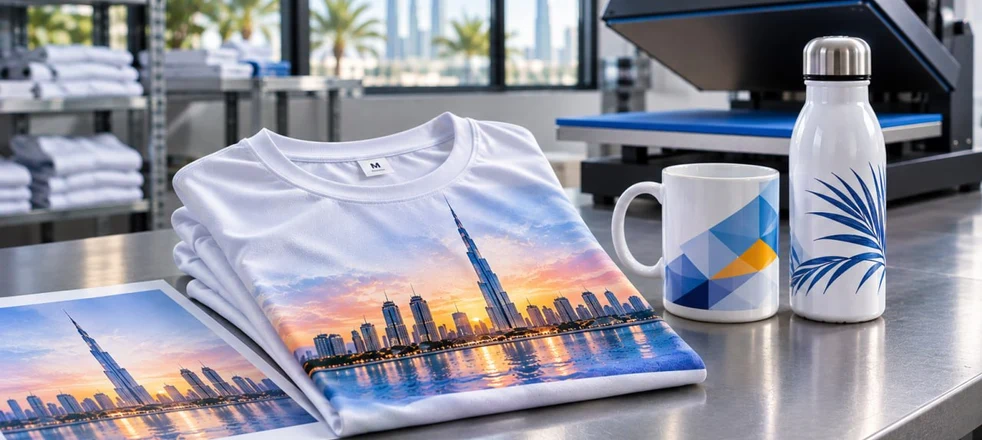
Sublimation transfer is a method of applying graphics to hard surfaces and textiles. It relies on the physical transition of a pigment directly from a solid to a gaseous state. This technology bypasses the liquid phase, allowing the dye to penetrate deeply into the substrate. Equipment using disperse inks, specialised paper and heat presses is used to produce clothing,promotional items and interior décor. The method is popular because it can reproduce complex gradients and fine photographic detail.
The Production Process
The production cycle consists of a series of sequential operations.
- Creating the transfer image. The artwork is printed onto porous paper using an inkjet printer and sublimation inks. The image is printed in reverse.
- Drying and stabilisation. The printed transfer must dry thoroughly to prevent the ink from bleeding or moisture from collecting under the heat press.
- Positioning on the blank. The paper transfer is aligned with the item and secured with heat-resistant tape. Standard adhesive tape must not be used: when heated, its adhesive layer melts and leaves permanent marks on the product.
- Heat treatment. The assembly is placed in a heat press. Operating temperatures typically range from 180 to 200°C. Under heat and pressure, the pigment vaporises and diffuses into the upper layers of the polymer or special coating.
- Cooling. After the press is opened and the paper backing is removed, the item is allowed to cool. The pigment solidifies within the material's structure, forming an integrated layer with the substrate.
Compatible Materials
The main requirement for textiles is a high proportion of synthetic fibres, primarily polyester. Natural fibres do not have the structure needed to retain the gaseous pigment. The method is therefore used to produce sportswear, flags, rucksacks and caps made from synthetic fabrics.
For promotional items and interior products, rigid blanks are used, including ceramic, glass, metal and polymer plates. A key requirement for hard substrates is a factory-applied coating that can withstand high temperatures and accept sublimation dyes. Without such a coating, sublimation cannot be carried out on ordinary plastic or untreated metal. Choosing the right blank determines dye adhesion and the durability of the finished product.
Performance Characteristics
This technology offers several technical advantages.
- Photographic accuracy. The method can reproduce halftone images, complex colour transitions and fine details without losing sharpness.
- Mechanical and chemical resistance. As the dye is incorporated into the material rather than remaining on the surface, the image does not rub off or crack and can withstand repeated washing cycles and exposure to harsh environmental conditions.
- UV resistance. The pigment does not fade in direct sunlight, which is particularly important for outdoor advertising and sportswear.
- Environmental safety. Disperse inks do not release toxic compounds either during printing or when the finished product is in use.
- No raised surface. The ink does not form a perceptible layer on the fabric, preserving its elasticity and breathability.
Production Risks and How to Prevent Them
The process must be carefully monitored at every stage. Common production defects and their causes include the following.
Low optical density and blurred images
If the image appears pale, check the orientation of the paper. The coating that holds the ink is present on only one side of the sheet. Printing on the reverse side results in pigment loss and a weak print.
Doubled outlines
Blurred or doubled outlines can occur if the transfer paper shifts out of position on the blank. This can happen if the transfer paper is not secured properly with heat-resistant tape or is disturbed when the press is opened before the item has cooled completely. Securing the paper firmly and avoiding movement during this stage helps prevent the problem.
No transfer or poor dye adhesion
If the pigment does not transfer to the substrate during heating or rubs off easily afterwards, the base material may be unsuitable. Sublimation does not work effectively on 100% cotton, linen or untreated aluminium. Natural fibres do not absorb disperse dye, and exposure to temperatures of 200°C may cause them to deform. These applications require alternative printing methods; sublimation should be used only on synthetic materials and blanks with a special polymer coating.