Advertising Print Materials: Purpose, Classification and Production Techniques
Printing is an industry concerned with reproducing graphic and textual information on a large scale. The term derives from Greek roots meaning ‘many’ and ‘to write’ and is now used to describe a range of processes for transferring images onto different materials. Advertising print materials are a distinct area of the printing industry that provides physical media for marketing communications, brand positioning and conveying information to target audiences.
The Role of Printed Advertising
As part of marketing campaigns, printed materials serve several specific purposes that digital channels cannot fully replicate.
- Physical contact and tactile experience. Physical media can convey a sense of reliability and trustworthiness. The paper’s weight and texture, along with the quality of the finishing, convey a company’s commitment to its business.
- Structured information. Multi-page formats can accommodate detailed specifications, technical information and commercial offers that go beyond the limitations of digital banners.
- Visual identity. Consistent use of brand guidelines, corporate colours and logos across printed materials reinforces the brand’s visual identity in consumers’ minds.
- Geographical and targeted distribution. Printed materials can be distributed to specific business centres, residential areas or B2B customer segments through direct mail.
- Encouraging conversions. QR codes, promotional codes and special offers on printed materials create a direct link between physical media and digital touchpoints.
Thus, advertising print materials do not compete with digital marketing but forms part of omnichannel strategies, helping maintain continuity across different communication channels.
Classification of Advertising Print Materials
The range of printed products available reflects the specific objectives of each marketing tool.
- Business cards. A basic means of sharing contact information. They are printed on coated card, designer board or synthetic materials and used for networking and business meetings. Finishing options include embossing, UV varnishing and sculptured embossing.
- Single-sheet products (flyers and leaflets). Available in sizes ranging from A6 to A4, they are designed for mass distribution, handouts at promotional events and inclusion in envelopes. Their layouts are usually concise, with an emphasis on the key commercial offer.
- Leaflets and brochures. Printed products featuring folds such as the roll fold, accordion fold or gate fold are used to present services, publish brand-building articles and provide structured product descriptions. Careful attention must be paid to navigation and layout grids.
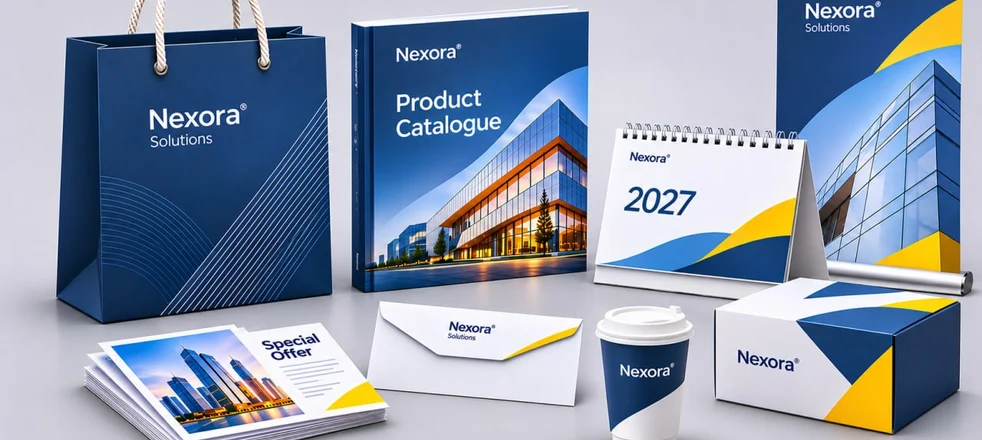
- Catalogues. Multi-page publications that organise a company's product range contain photographs, product codes, technical specifications and price lists. They can be bound with staples, wire or plastic coils, or by perfect binding.
- Business correspondence. An essential part of business correspondence, branded envelopes in C4, C5 and C6 sizes help maintain a consistent visual identity when communicating with business partners and government agencies.
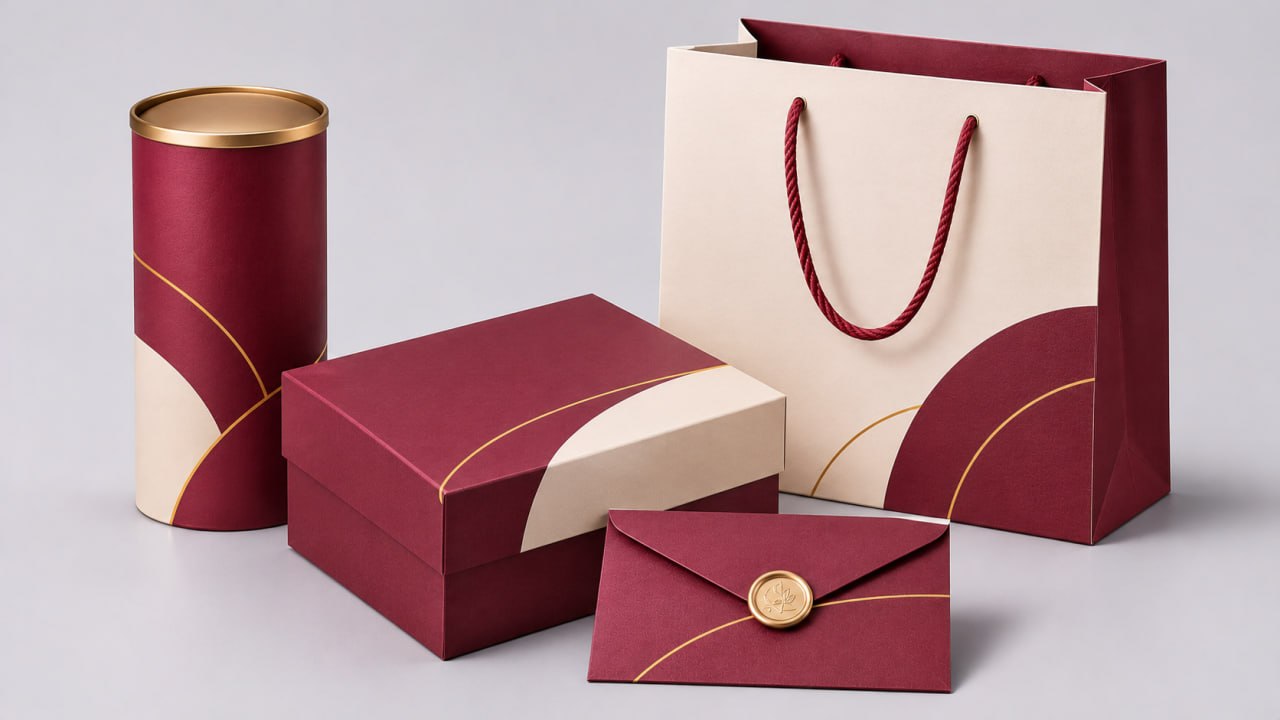
- Branding and packaging. Paper bags, drinks cups and cartons serve as mobile advertising media in retail, food service and at events. They are made from materials such as kraft paper and laminated coated board.
- POS materials. Products used to display and promote goods in retail spaces, including shelf wobblers, shelf talkers, cardboard displays and roll-up banners, help guide customers and draw attention to specific product groups.
- Large-format print. Banners, posters and films used for outdoor advertising, shop-window displays and indoor signage. These applications require high print resolution and inks that can withstand environmental conditions.
- Labels and stickers. Self-adhesive labels, stickers and decals used for product labelling, inventory management, sealing and promotional offers are printed on paper or polymer films and can be die-cut into any shape.
- Calendars. Wall, desk and pocket calendars provide a long-term brand presence, keeping the brand in view throughout the year.
Printing Technologies
The choice of printing method depends on the format, print run, material and project budget.
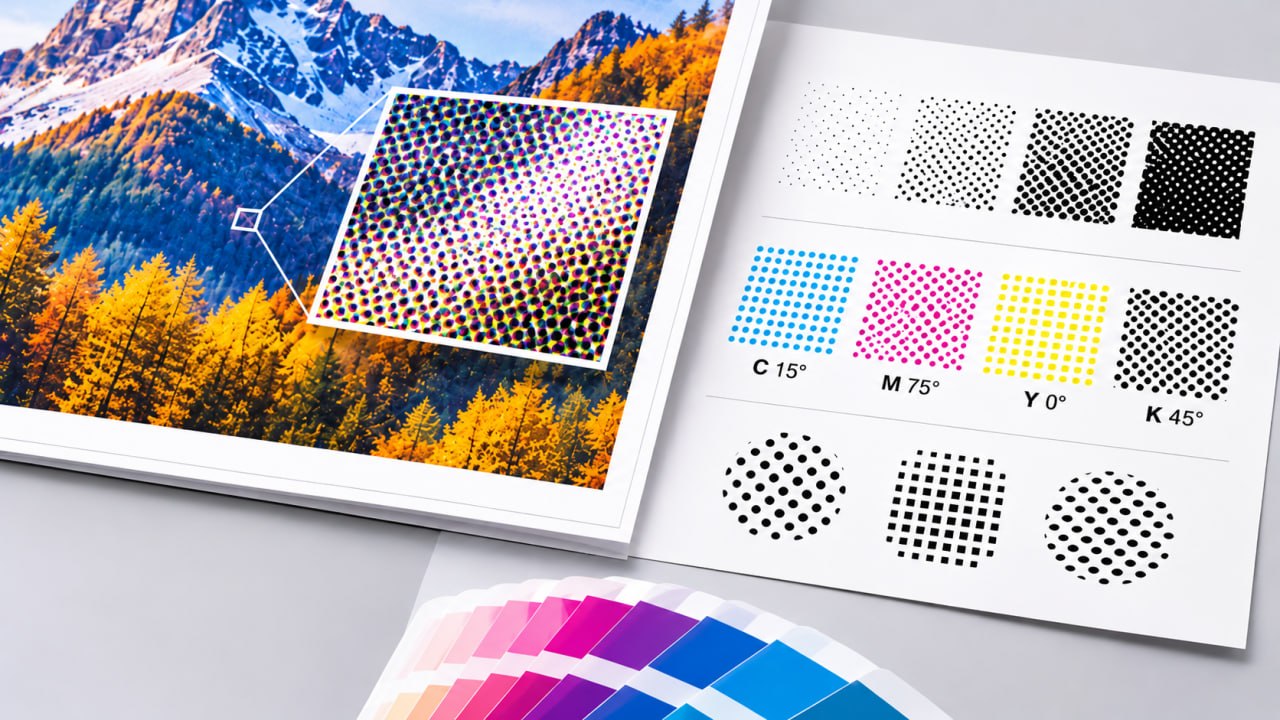
- Offset printing. A traditional process in which ink is transferred from a printing plate to a rubber blanket cylinder and then onto paper. Being cost-effective for medium and large print runs, it offers accurate colour reproduction and supports the use of Pantone colours and special inks.
- Digital printing. An electrophotographic or inkjet process that transfers images directly to the substrate without the need for printing plates. It is ideal for short runs, urgent orders and personalised printing.
- Large-format printing. Printing on roll-fed or sheet materials ranging from 1.6 to 5 metres in width. Solvent, eco-solvent or latex inks are used for outdoor advertising, while UV-curable inks are suitable for indoor applications.
- Silkscreen printing. Ink is transferred through a mesh screen, creating a dense layer that can be felt on the surface. The method is used on board, plastic and textiles and for applying special effects.
- Flexographic printing is a high-speed process that uses flexible photopolymer printing plates and is widely used for self-adhesive labels, flexible packaging and corrugated board products.
- UV printing. Ink is applied directly to the substrate and cured almost instantly by ultraviolet light. This method can print directly onto rigid materials such as PVC, acrylic, glass, composite panels and wood.
Selecting the most suitable production process requires careful consideration of all relevant production factors. A professional printing company can assess artwork for technical suitability, recommend materials and select the appropriate printing method to ensure that the print run meets the specified technical requirements.