



Printing paperback books
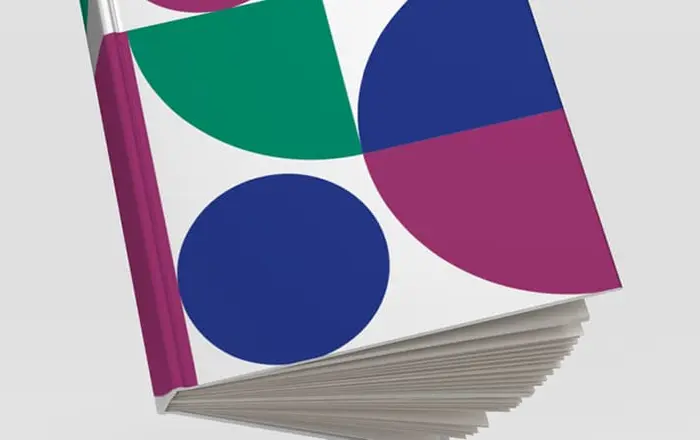
- Material: offset, coated paper, cardboard.
- Format: А3, А4, А5 and custom sizes.
- Design: development or refinement of a unique layout.
- Printing methods: offset, digital, UV.
- Post-printing processing: embossing, folding, binding, lamination, die-cutting, corner rounding, numbering.
- Production time: from 1 day.
 Price list
A price list implies the use of a limited set of materials and production types.
Printing is a complex technological process where each order is unique and one-of-a-kind, and the cost depends on a number of factors, such as product type, size, material, finishing, print run, etc.
In a world of templates and ready-made solutions, we approach each customer individually, focusing on their specific “pain points”, and we take on the challenge of solving complex and unclear tasks. Relying on years of experience, the professionalism of our staff, and a constantly updated fleet of equipment, we can offer more options than just a dry cost in a table.
We will help optimise production, smooth out budget constraints, and find alternative solutions. Most importantly, everything is resolved through dialogue, where we ask clarifying questions to find the most convenient and most useful option.
A practical and budget-friendly solution, paperbacks are here when you need a small volume of printed editions. This choice offers great design possibilities and significantly speeds up the printing process. Affected by the paper thickness and the page count, the fastening procedure consists in putting single sheets or several books together.
Possible Binding Types
We print books in any volume (from a single copy) with modern digital or offset equipment. Offset or coated paper is used for the pages, and high-density cardboard - for the cover. There are two main ways of fixing the sheets for paperbacks:
- Perfect Binding, where the block is simply glued to the spine;
- Burst Binding, a more reliable style, which is also more costly and applied for coated paper. It is ideal for printed matter intended for heavy use, i.e. for textbooks, reference manufals, catalogues, magazines, etc.
Even careless handling will not make your publication fall apart. Being cost effective, both types are time saving at that.
How we print


Portfolio


Time of manufacture
The more sheets and post-print operations, the more time it will take to make a print run of a softcover book. You may also need editor services to have the content corrected. The post-printing may include lamination of the cover, embossing, and full or partial UV varnishing.
Benefits


Steps printing


Reviews
Our clients
























Price
The cost of printing a soft cover publication depends on:
- the number of pages;
- the format of the edition;
- the density of the materials used;
- the type of binding;
- the printing technology;
- the post-printing operations;
- the print run and deadlines.
Types of binding


Cooperation


